I became acquainted with Enneagram some years ago, and it has been a game-changer for me in all facets of my life, so I wanted to begin to share it with you. This will be blog 1 of a 4-part blog series to begin to share the basics.
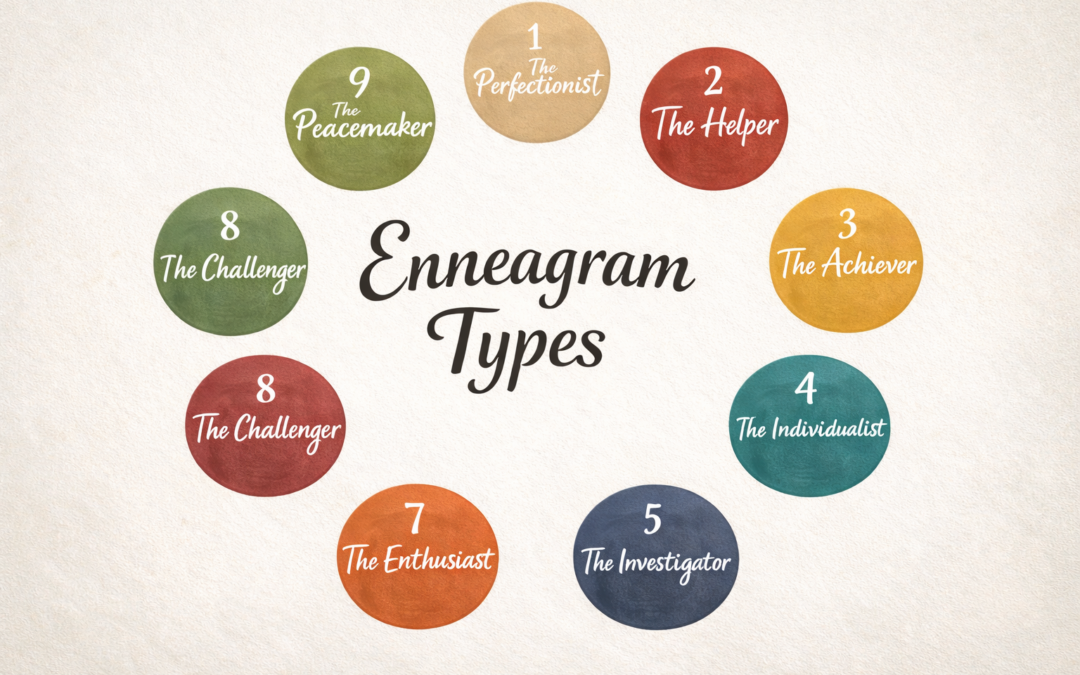
In the world of the Enneagram there are 9 personality types. The basic understanding is that you are born with one type and this is yours for life. What changes are the ways in which we engage with our type, and tap into the other types. The Enneagram system is very dynamic and always evolving.
I would like to start with what I believe to be the most foundational element of the system: The Three Centers of Intelligence.
The Enneagram isn’t just a personality test; it’s a map of human consciousness. At its core, it suggests that we all have three distinct ways of processing reality—through our Bodies, our Hearts, and our Heads. While we use all three, we tend to over-rely on one, leading to the specific “filters” that define our Enneagram type.
Understanding these centers is the difference between “learning a label” and “doing the work.”
What Are the Centers of Intelligence?
In the Enneagram tradition, “intelligence” doesn’t refer to your IQ. Instead, it refers to a center of perception. We have three “brains” that help us navigate the world:
The Gut (Instinctual) Center: Focuses on autonomy, boundaries, and being in the physical world.
The Heart (Feeling) Center: Focuses on connection, identity, and how others perceive us.
The Head (Thinking) Center: Focuses on security, understanding, and anticipating the future.
Each center consists of three Enneagram types that share a common “underlying emotion” or struggle. When we are healthy, these centers work in harmony. When we are stressed, we get “stuck” in our primary center, leading to the habitual patterns of our type.
- The Gut Center: The Instinctual Intelligence
Types: 8, 9, and 1
Primary Emotion: Anger
The Gut Center is about the here and now. It is rooted in the physical body and deals with our sense of existence and personal boundaries. If you belong to this center, your first reaction to a situation is usually a physical “gut feeling.”
The Core Struggle: Anger and Control
The common theme here is Anger. This isn’t always “rage”; it can manifest as resentment, irritation, or a desire to push back against the world. This anger stems from a perceived loss of autonomy or a need to control one’s environment to feel safe.
Type 8 (The Challenger): Directs anger outward. They use their energy to impact the environment and ensure no one controls them.
Type 9 (The Peacemaker): Denies or bottles up anger. They seek to maintain internal and external peace by “falling asleep” to their own desires.
Type 1 (The Reformer): Directs anger inward as resentment. They channel their energy into self-control and making the world “right” or “perfect.”
The Gift and the Shadow:
The Gift: Groundedness, presence, and the ability to take decisive action.
The Shadow: Being overly reactive, stubborn, or “armored” against the world.
- The Heart Center: The Emotional Intelligence
Types: 2, 3, and 4
Primary Emotion: Shame
The Heart Center is about connection. It processes the world through the lens of relationships and identity. If you are in this center, you are highly attuned to the “vibe” of a room and how you are being perceived by others.
The Core Struggle: Shame and Identity
The underlying emotion here is Shame. These types often feel that their “true self” isn’t enough, so they create an image or a persona to gain love, validation, or a sense of worth.
Type 2 (The Helper): Seeks validation by being needed. They focus on the needs of others to ignore their own shame and feel worthy of love.
Type 3 (The Achiever): Seeks validation through success. They “perform” to gain admiration, often losing touch with who they actually are behind the trophies.
Type 4 (The Individualist): Seeks validation through uniqueness. They lean into their “brokenness” or specialness to feel significant and different from the “ordinary.”
The Gift and the Shadow:
The Gift: Empathy, emotional depth, and a profound capacity for relationship.
The Shadow: People-pleasing, vanity, or becoming lost in emotional “moodiness.”
- The Head Center: The Mental Intelligence
Types: 5, 6, and 7
Primary Emotion: Fear
The Head Center is about security. It processes the world through data, analysis, and planning. If you are in this center, your first move is to step back and “think it through.” You use your mind to create a sense of safety in an unpredictable world.
The Core Struggle: Fear and Anxiety
The underlying emotion is Fear (or more accurately, anxiety). These types feel a sense of inner emptiness or lack of guidance, so they use their mental faculties to find a way to navigate the future.
Type 5 (The Investigator): Manages fear by withdrawing. They gather knowledge and conserve their energy so they don’t feel overwhelmed by the world’s demands.
Type 6 (The Loyalist): Manages fear by anticipating. They scan for what could go wrong and seek out structures or people they can trust.
Type 7 (The Enthusiast): Manages fear by distracting. They keep their minds busy with positive possibilities and new experiences to avoid feeling pain or anxiety.
The Gift and the Shadow:
The Gift: Clarity, objectivity, and the ability to synthesize complex ideas.
The Shadow: Overthinking, detachment, or chronic anxiety about “what’s next.”
Why This Matters for Your Growth
Most of us spend our lives trapped in our dominant center. A Type 5 tries to “think” their way out of a feeling; a Type 2 tries to “feel” their way through a logical problem; a Type 8 tries to “muscle” through an emotional boundary.
The goal of the Enneagram is Integration.
When we understand our center, we can begin to “wake up” the other two. Growth looks like:
Gut Types learning to pause and feel (Heart) or analyze (Head) before reacting.
Heart Types learning to ground themselves in their bodies (Gut) or find objective truth (Head) rather than relying on external validation.
Head Types learning to trust their physical instincts (Gut) and connect with their raw emotions (Heart) rather than retreating into their minds.
Summary Table: The Centers at a Glance
Center: Gut Heart Head
Primary Types: 8, 9, 1 2, 3, 4 5, 6, 7
Core Emotion: Anger Shame Fear
Primary Focus: Autonomy/Being Identity/Connection Integrating the Wisdom
The Enneagram is not a box to put yourself in; it’s a way to see the box you are already in and find the exit. By identifying your Center of Intelligence, you stop asking “What am I doing?” and start asking “Why am I doing it?”
Next time you feel triggered—whether it’s a flash of irritation, a pang of self-consciousness, or a wave of anxiety—stop and ask: Which center is talking right now? That simple moment of awareness is the beginning of real transformation.
Note: If you decide to take the test to begin to explore your type, the one that I like and use with my clients can be accessed at the following site, and it is called the RHETI. Please note that there is a fee for this one. There are others out there, this is just my preference. https://www.enneagraminstitute.com/